Physical chemistry - Atomic structure - Amount of substance Bonding - Energetics Kinetics - Chemical equilibrium Inorganic chemistry - Trends of the periodic table - Group 2 the alkaline earth metals - Group 7 the halogens Organic chemistry - Introduction to organic chemistry - Alkanes - Halogenoalkanes - Alkenes - Alcohols - Organic analysis Linear assessment, with all exams at the end of the 2-year course Physical chemistry Year 1 content plus: - Thermodynamics - Rate equations - Equilibrium constant (Kp) - Acids & bases - Electrochemical cells. Inorganic chemistry Year 1 content plus: - Properties of Period 3 elements and - their oxides - Transition metals - Reactions of ions in aqueous solution Organic chemistry Year 1 content plus: - Optical isomerism - Aldehydes and ketones - Carboxylic acids and derivatives - Aromatic chemistry - Amines - Polymers - Amino acids, proteins and DNA, - Organic synthesis - NMR spectroscopy - Chromatography
GCSE, OCRN or BTEC equivalent exam entry requirement of 5+ 9 – 4 grades (A* – C in the legacy system). You will need to have either gained high grades in your science GCSE, at least grade 6. Mathematics GCSE at a grade 6 or higher is also desirable. GCSE, OCRN or BTEC equivalent exam entry requirement of 5+ 9 – 4 grades (A* – C in the legacy system).
Paper 1 • Inorganic chemistry, with relevant physical chemistry • Relevant practical skills Written exam: 2 hours • 105 marks • 35% of A-level 105 marks: a mixture of short and long answer questions Paper 2 • Organic chemistry, with relevant physical chemistry • Relevant practical skills Written exam: 2 hours • 105 marks • 35% of A-level 105 marks: a mixture of short and long answer questions Paper 3 • All practical skills • All content Written exam: 2 hours • 90 marks • 30% of A-level • 40 marks: questions on practical techniques and data analysis • 20 marks: testing across the specification • 30 marks: multiple choice questions
About Education Provider
| Region | East of England |
| Local Authority | Hertfordshire |
| Ofsted Rating | Outstanding |
| Gender Type | Co-Educational |
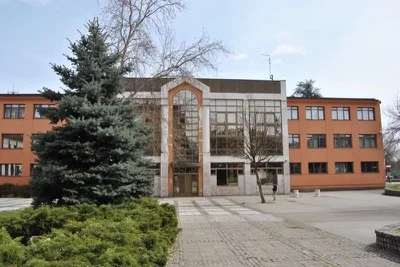
| Address | Park Road, Ware, SG12 0DP |
Physical chemistry - Atomic structure - Amount of substance Bonding - Energetics Kinetics - Chemical equilibrium Inorganic chemistry - Trends of the periodic table - Group 2 the alkaline earth metals - Group 7 the halogens Organic chemistry - Introduction to organic chemistry - Alkanes - Halogenoalkanes - Alkenes - Alcohols - Organic analysis Linear assessment, with all exams at the end of the 2-year course Physical chemistry Year 1 content plus: - Thermodynamics - Rate equations - Equilibrium constant (Kp) - Acids & bases - Electrochemical cells. Inorganic chemistry Year 1 content plus: - Properties of Period 3 elements and - their oxides - Transition metals - Reactions of ions in aqueous solution Organic chemistry Year 1 content plus: - Optical isomerism - Aldehydes and ketones - Carboxylic acids and derivatives - Aromatic chemistry - Amines - Polymers - Amino acids, proteins and DNA, - Organic synthesis - NMR spectroscopy - Chromatography
GCSE, OCRN or BTEC equivalent exam entry requirement of 5+ 9 – 4 grades (A* – C in the legacy system). You will need to have either gained high grades in your science GCSE, at least grade 6. Mathematics GCSE at a grade 6 or higher is also desirable. GCSE, OCRN or BTEC equivalent exam entry requirement of 5+ 9 – 4 grades (A* – C in the legacy system).
Paper 1 • Inorganic chemistry, with relevant physical chemistry • Relevant practical skills Written exam: 2 hours • 105 marks • 35% of A-level 105 marks: a mixture of short and long answer questions Paper 2 • Organic chemistry, with relevant physical chemistry • Relevant practical skills Written exam: 2 hours • 105 marks • 35% of A-level 105 marks: a mixture of short and long answer questions Paper 3 • All practical skills • All content Written exam: 2 hours • 90 marks • 30% of A-level • 40 marks: questions on practical techniques and data analysis • 20 marks: testing across the specification • 30 marks: multiple choice questions