Chemistry will suit students who have found the subject interesting at GCSE; who want to understand how and why chemical reactions occur, how to monitor them, measure them, predict likely outcomes of any substances mixing or reacting and like to do practical work. Some students prefer the more visual and descriptive aspects and others the mathematical problem solving, but overall the main factor contributing to enjoyment and success is a willingness to learn at a steady pace. This is not a subject that can be left to revise all at the end of two years. It does have a high content of mathematical problem solving in year 2 (approx. 30%) and students are strongly advised to combine it with another science or with mathematics. An alternative is to add the one year AS equivalent course, Mathematical Studies, to your program in year. If you choose this course you would benefit from: - Experienced teachers who specialise in chemistry and have experience in industry - Trips to universities to find out about studying beyond KEC - Working with the Royal Society of Chemistry on analysis of organic compounds - Competitions run by Cambridge University and the Royal Society of Chemistry
5 x GCSE grades 4-9 (incl. English Language) 6 in Maths 6,6 in Chemistry and Physics/Biology (or 66 double award Science) 5 in one other essay based subject: English, Geography, History, Languages
100% exam 3 exams: Paper 1: Periodic Table, Elements and Physical Chemistry 37% (2h 15min) Paper 2: Synthesis and Analytical Techniques 37% (2h 15min) Paper 3: Unified Chemistry 26% (1h 30min) There is also a practical endorsement awarded to all students who complete the specified practical work and show competency across all assessed skills. We anticipate all students would pass this unless there have been exceptional circumstances.
About Education Provider
| Region | West Midlands |
| Local Authority | Warwickshire |
| Ofsted Rating | Good |
| Gender Type | Co-Educational |
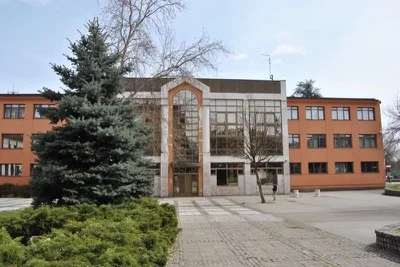
| Address | King Edward Road, Nuneaton, CV11 4BE |
Chemistry will suit students who have found the subject interesting at GCSE; who want to understand how and why chemical reactions occur, how to monitor them, measure them, predict likely outcomes of any substances mixing or reacting and like to do practical work. Some students prefer the more visual and descriptive aspects and others the mathematical problem solving, but overall the main factor contributing to enjoyment and success is a willingness to learn at a steady pace. This is not a subject that can be left to revise all at the end of two years. It does have a high content of mathematical problem solving in year 2 (approx. 30%) and students are strongly advised to combine it with another science or with mathematics. An alternative is to add the one year AS equivalent course, Mathematical Studies, to your program in year. If you choose this course you would benefit from: - Experienced teachers who specialise in chemistry and have experience in industry - Trips to universities to find out about studying beyond KEC - Working with the Royal Society of Chemistry on analysis of organic compounds - Competitions run by Cambridge University and the Royal Society of Chemistry
5 x GCSE grades 4-9 (incl. English Language) 6 in Maths 6,6 in Chemistry and Physics/Biology (or 66 double award Science) 5 in one other essay based subject: English, Geography, History, Languages
100% exam 3 exams: Paper 1: Periodic Table, Elements and Physical Chemistry 37% (2h 15min) Paper 2: Synthesis and Analytical Techniques 37% (2h 15min) Paper 3: Unified Chemistry 26% (1h 30min) There is also a practical endorsement awarded to all students who complete the specified practical work and show competency across all assessed skills. We anticipate all students would pass this unless there have been exceptional circumstances.