A Level physics teaches the fundamental principles of physics that explain the universe around us, highlighting real-world applications. The specification has a bedrock of how science works to show how physics affects modern life and teaches skills relevant to future careers. Year one • Measurements and their errors, including the use of SI units and their prefixes, limitations of physical measurement and estimation of physical quantities. • Particles and radiation, including constituents of the atom, particle interactions and collisions of electrons with atoms. • Waves, including progressive waves, interference and diffraction. • Mechanics and energy, including projectile motion and Newton’s laws of motion. • Electricity, including current/voltage characteristics, circuits, electromotive force and internal resistance. Year two • Further mechanics and thermal physics, including periodic motion, thermal energy transfer and molecular kinetic theory. • Fields, including Newton’s law of gravitation, orbits of planets and satellites and magnetic flux density. • Nuclear physics, including evidence for the nucleus, radioactive decay and nuclear instability. Option - Astrophysics, including classification of stars by luminosity, Doppler effect and the detection of exoplanets.
• Five subjects at grade 4 or above, including English and maths. • Grade 6 in GCSE Physics or Grade 6 in Combined Science and Grade 6 in Maths.
• Paper 1: 34% of A Level covering topics 1-5 and periodic motion. • Paper 2: 34% of A Level covering topics 6-8. • Paper 3: 32% of A Level covering data analysis, practical skills and the option topic.
About Education Provider
| Region | West Midlands |
| Local Authority | Dudley |
| Ofsted Rating | Good |
| Gender Type | Co-Educational |
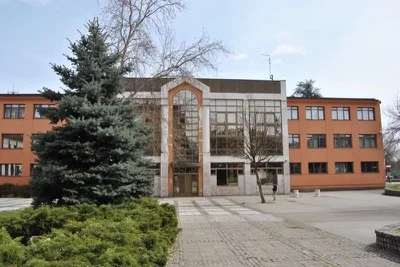
| Address | Richmond Street, Halesowen, B63 4BB |
A Level physics teaches the fundamental principles of physics that explain the universe around us, highlighting real-world applications. The specification has a bedrock of how science works to show how physics affects modern life and teaches skills relevant to future careers. Year one • Measurements and their errors, including the use of SI units and their prefixes, limitations of physical measurement and estimation of physical quantities. • Particles and radiation, including constituents of the atom, particle interactions and collisions of electrons with atoms. • Waves, including progressive waves, interference and diffraction. • Mechanics and energy, including projectile motion and Newton’s laws of motion. • Electricity, including current/voltage characteristics, circuits, electromotive force and internal resistance. Year two • Further mechanics and thermal physics, including periodic motion, thermal energy transfer and molecular kinetic theory. • Fields, including Newton’s law of gravitation, orbits of planets and satellites and magnetic flux density. • Nuclear physics, including evidence for the nucleus, radioactive decay and nuclear instability. Option - Astrophysics, including classification of stars by luminosity, Doppler effect and the detection of exoplanets.
• Five subjects at grade 4 or above, including English and maths. • Grade 6 in GCSE Physics or Grade 6 in Combined Science and Grade 6 in Maths.
• Paper 1: 34% of A Level covering topics 1-5 and periodic motion. • Paper 2: 34% of A Level covering topics 6-8. • Paper 3: 32% of A Level covering data analysis, practical skills and the option topic.