Economics has become high profile. Recent media headlines include: “How would an interest rate rise of 0.25% affect me?” - BBC News; “UK GDP growth weakest since 2013 and slower than previously thought” - The Guardian; “Consumer confidence defiant but personal finance fears loom” - The Telegraph. You will look at these and many more controversies helping you develop awareness of the world around you and a solid understanding of the importance of economics and its impact on our lives. To succeed at economics you must read widely around the subject and be interested and engaged in business and economic news. The course requires a significant understanding and use of numeric data and you will need to be confident undertaking calculations and using data presented in tables, charts, and diagrams. The new linear AQA specification is now well established and is engaging with up-to-date content that takes into account fundamental advances and changes in economic ideas. The approach to economics is to apply economic theory to support analysis of current economic problems and issues, encouraging students to appreciate the interrelationships between microeconomics and macroeconomics. Economists think and you’ll learn to question and challenge economic controversies and the disagreements between economists in a way that develops your critical thinking skills and helps you understand the facts behind the headlines.
A minimum of 5GCSEs (or equivalent) ‘good’ passes or better including either GCSE Maths or English. 5 in Maths, plus 5 in English Language or Literature.
100% examined. Paper 1: Microeconomics; data response questions, essay questions. Paper 2: Macroeconomics; data response questions, essay questions. Paper 3: Economic principles and issues; multiple choice questions, case study questions.
About Education Provider
| Region | South West |
| Local Authority | Bath and North East Somerset |
| Ofsted Rating | Good |
| Gender Type | Co-Educational |
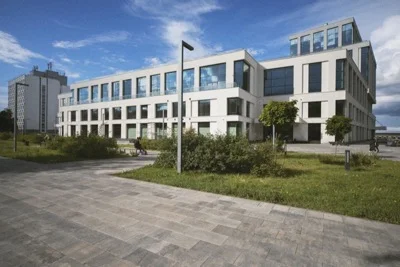
| Address | Chandag Road, Keynsham, Bristol, BS31 1PH |
Economics has become high profile. Recent media headlines include: “How would an interest rate rise of 0.25% affect me?” - BBC News; “UK GDP growth weakest since 2013 and slower than previously thought” - The Guardian; “Consumer confidence defiant but personal finance fears loom” - The Telegraph. You will look at these and many more controversies helping you develop awareness of the world around you and a solid understanding of the importance of economics and its impact on our lives. To succeed at economics you must read widely around the subject and be interested and engaged in business and economic news. The course requires a significant understanding and use of numeric data and you will need to be confident undertaking calculations and using data presented in tables, charts, and diagrams. The new linear AQA specification is now well established and is engaging with up-to-date content that takes into account fundamental advances and changes in economic ideas. The approach to economics is to apply economic theory to support analysis of current economic problems and issues, encouraging students to appreciate the interrelationships between microeconomics and macroeconomics. Economists think and you’ll learn to question and challenge economic controversies and the disagreements between economists in a way that develops your critical thinking skills and helps you understand the facts behind the headlines.
A minimum of 5GCSEs (or equivalent) ‘good’ passes or better including either GCSE Maths or English. 5 in Maths, plus 5 in English Language or Literature.
100% examined. Paper 1: Microeconomics; data response questions, essay questions. Paper 2: Macroeconomics; data response questions, essay questions. Paper 3: Economic principles and issues; multiple choice questions, case study questions.