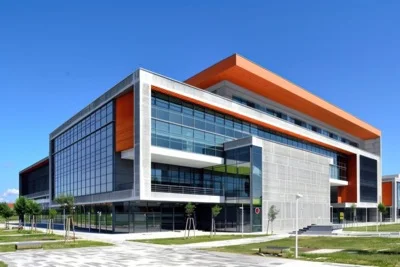
During the course, students will develop knowledge and understanding relevant to their chosen areas of Fine Art, including historical and contemporary developments and societal influences on art. Skills and techniques will be developed through the analysis of, and responses to, other artists’ work and processes, showing an understanding of a range of approaches and creative use of a variety of mediums. The course is structured to provide students with the opportunity to experiment, develop and refine their skills in a range of areas. Each discrete task will have a range of foci so students can customise their learning. The course will also encourage high level learning management skills; students are encouraged to utilise independent and personal project management skills as the course develops, preparing them for a life beyond school and teacher instruction. During the course, students are required to work in one or more area(s) of Fine Art, such as: • drawing and painting • mixed-media, including collage and assemblage • sculpture • ceramics • installation • printmaking (relief, intaglio) • photography.
- 6 at GCSE - A minimum GCSE score of 48 points from the best eight full course GCSE passes (see points tables below). - A minimum of a grade 5 in English and Mathematics. - A minimum grade for each subject as specified in the subject specific table.
60% Personal investigation 40% Externally set assignment AO1: Develop ideas through sustained and focused investigations informed by contextual and other sources, demonstrating analytical and critical understanding. AO2: Explore and select appropriate resources, media, materials, techniques and processes, reviewing and refining ideas as work develops. AO3: Record ideas, observations and insights relevant to intentions, reflecting critically on work and progress. AO4: Present a personal and meaningful response that realises intentions and, where appropriate, makes connections between visual and other elements.
About Education Provider
| Region | South East |
| Local Authority | Buckinghamshire |
| Ofsted Rating | Outstanding |
| Gender Type | Boys |
| Address | Chesham Road, Amersham, HP6 5HA |
During the course, students will develop knowledge and understanding relevant to their chosen areas of Fine Art, including historical and contemporary developments and societal influences on art. Skills and techniques will be developed through the analysis of, and responses to, other artists’ work and processes, showing an understanding of a range of approaches and creative use of a variety of mediums. The course is structured to provide students with the opportunity to experiment, develop and refine their skills in a range of areas. Each discrete task will have a range of foci so students can customise their learning. The course will also encourage high level learning management skills; students are encouraged to utilise independent and personal project management skills as the course develops, preparing them for a life beyond school and teacher instruction. During the course, students are required to work in one or more area(s) of Fine Art, such as: • drawing and painting • mixed-media, including collage and assemblage • sculpture • ceramics • installation • printmaking (relief, intaglio) • photography.
- 6 at GCSE - A minimum GCSE score of 48 points from the best eight full course GCSE passes (see points tables below). - A minimum of a grade 5 in English and Mathematics. - A minimum grade for each subject as specified in the subject specific table.
60% Personal investigation 40% Externally set assignment AO1: Develop ideas through sustained and focused investigations informed by contextual and other sources, demonstrating analytical and critical understanding. AO2: Explore and select appropriate resources, media, materials, techniques and processes, reviewing and refining ideas as work develops. AO3: Record ideas, observations and insights relevant to intentions, reflecting critically on work and progress. AO4: Present a personal and meaningful response that realises intentions and, where appropriate, makes connections between visual and other elements.