Do you want a career where you can make a difference in the health of others? Then you will need to know how the human body works, in good and poor health. There are many different ways that human health can be affected, from individual biology and genetic makeup to lifestyle decisions and actions taken by individuals and populations. You will study how the human body functions at a genetic, cellular, and tissue level. You will gain an understanding of how human biology and lifestyle factors interact to affect the health of individuals and populations. You will also explore the many ways that this knowledge can be applied to improve diagnostic and health outcomes. This will give you a foundation for biological study, as you will gain theoretical knowledge of human body functioning, insight into the factors and risks affecting health, and knowledge of how biology is applied to make a positive impact on all our lives. The units covered provide a good grounding in a range of scientific areas within Biology and make the course suitable for students wishing to go into a wide range of scientific industries and courses at University. During the course, you will develop the transferable and higher-order skills that are valued by higher education providers and employers. The qualification carries UCAS points and is recognized by higher education providers as contributing to admission requirements for many relevant courses. Taken on its own, the BTEC in Human Biology will offer the opportunity to progress to some Biology-related degree courses. Taken alongside other qualifications, it will prepare learners to progress to a wider range of degree programs or employment, including Occupational Health, Nursing, Midwifery, and Sport Sciences. Three mandatory units are studied in the Extended certificate: • Unit 1: Principles of Applied Human Biology • Unit 2: Practical Microbiology and Infectious Diseases • Unit 3: Human Biology and Health Issues
• 5 GCSEs grades A* - C/9 to 4 including English and Mathematics • GCSE Combined Science Grade 5-4
Assessment is specifically designed to fit the purpose and objective of the qualification. It includes a range of assessment types and styles suited to vocational qualifications in the sector. There are 2 main forms of assessment of which you need to be aware: external, internal, and synoptic, which include assignments and examinations.
About Education Provider
| Region | North East |
| Local Authority | Northumberland |
| Ofsted Rating | Good |
| Gender Type | Co-Educational |
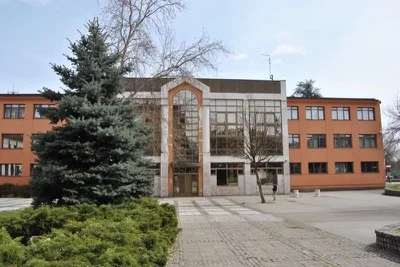
| Address | Sixth Avenue, Blyth, NE24 2SY |
Do you want a career where you can make a difference in the health of others? Then you will need to know how the human body works, in good and poor health. There are many different ways that human health can be affected, from individual biology and genetic makeup to lifestyle decisions and actions taken by individuals and populations. You will study how the human body functions at a genetic, cellular, and tissue level. You will gain an understanding of how human biology and lifestyle factors interact to affect the health of individuals and populations. You will also explore the many ways that this knowledge can be applied to improve diagnostic and health outcomes. This will give you a foundation for biological study, as you will gain theoretical knowledge of human body functioning, insight into the factors and risks affecting health, and knowledge of how biology is applied to make a positive impact on all our lives. The units covered provide a good grounding in a range of scientific areas within Biology and make the course suitable for students wishing to go into a wide range of scientific industries and courses at University. During the course, you will develop the transferable and higher-order skills that are valued by higher education providers and employers. The qualification carries UCAS points and is recognized by higher education providers as contributing to admission requirements for many relevant courses. Taken on its own, the BTEC in Human Biology will offer the opportunity to progress to some Biology-related degree courses. Taken alongside other qualifications, it will prepare learners to progress to a wider range of degree programs or employment, including Occupational Health, Nursing, Midwifery, and Sport Sciences. Three mandatory units are studied in the Extended certificate: • Unit 1: Principles of Applied Human Biology • Unit 2: Practical Microbiology and Infectious Diseases • Unit 3: Human Biology and Health Issues
• 5 GCSEs grades A* - C/9 to 4 including English and Mathematics • GCSE Combined Science Grade 5-4
Assessment is specifically designed to fit the purpose and objective of the qualification. It includes a range of assessment types and styles suited to vocational qualifications in the sector. There are 2 main forms of assessment of which you need to be aware: external, internal, and synoptic, which include assignments and examinations.