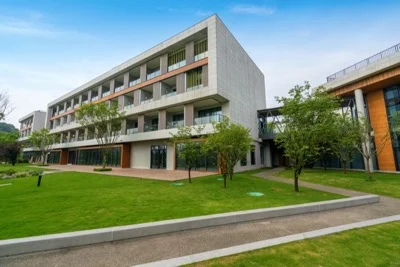
Music A Level is fully recognised as a subject appropriate for university admission. Students who have studied music often continue with their studies in further education, usually at least one per year. Students often combine music with drama and / or art to provide a wide foundation in the arts. It is also common for students to study music alongside mathematics and sciences to provide a diverse Sixth Form programme. The Music Department is very fortunate to have a state of the art music school. There are dedicated areas for A Level music lessons and students have the opportunity to use all appropriate facilities. There is a very busy concert schedule of around 30 concerts. Sixth form students play an important lead role, indeed organising some events themselves. Concerts range from full scale orchestral and choral concerts to more informal smaller events. Music theatre is also a strong element of the school. A major production is mounted at a local theatre every two years. Students also have the opportunity to perform at various London venues, including Milton Court and St James’ Piccadilly. Another strength of the department is chamber music. In recent years the school has become national winners in the Pro Corda Competition on several occasions.
GCSE Music Grade 6, plus at least Grade 7 standard on one instrument. A second instrument is not necessary, although useful (especially piano). Grade 5 (or above) theory standard would be ideal. Students who have not taken GCSE Music would have to show evidence of strong performance skills (one or two instruments at Grade 7 or above) with Grade 5 theory.
These are assessed through both aural questions and essays in a two hour paper.
About Education Provider
| Region | South East |
| Local Authority | Surrey |
| Ofsted Rating | |
| Gender Type | Co-Educational |
| ISI Report | View Report |
| Boarding Fee | £38,763 - £42,933 |
| Sixth Form Fee | £23,583 - £24,642 |
| Address | Ashtead Park, Park Lane, Surrey, KT21 1ET |
Music A Level is fully recognised as a subject appropriate for university admission. Students who have studied music often continue with their studies in further education, usually at least one per year. Students often combine music with drama and / or art to provide a wide foundation in the arts. It is also common for students to study music alongside mathematics and sciences to provide a diverse Sixth Form programme. The Music Department is very fortunate to have a state of the art music school. There are dedicated areas for A Level music lessons and students have the opportunity to use all appropriate facilities. There is a very busy concert schedule of around 30 concerts. Sixth form students play an important lead role, indeed organising some events themselves. Concerts range from full scale orchestral and choral concerts to more informal smaller events. Music theatre is also a strong element of the school. A major production is mounted at a local theatre every two years. Students also have the opportunity to perform at various London venues, including Milton Court and St James’ Piccadilly. Another strength of the department is chamber music. In recent years the school has become national winners in the Pro Corda Competition on several occasions.
GCSE Music Grade 6, plus at least Grade 7 standard on one instrument. A second instrument is not necessary, although useful (especially piano). Grade 5 (or above) theory standard would be ideal. Students who have not taken GCSE Music would have to show evidence of strong performance skills (one or two instruments at Grade 7 or above) with Grade 5 theory.
These are assessed through both aural questions and essays in a two hour paper.