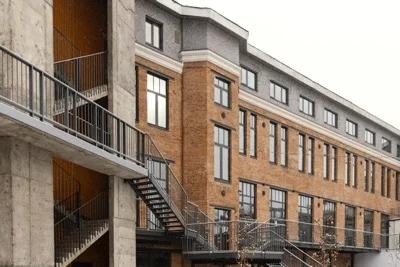
The Art Department is built on the philosophy that each student has what it takes to be an artist. A sentiment voiced by Picasso, ‘Every child is born an artist, the problem is how to remain one once we grow up.’ We offer an innovative curriculum set around key points of extra-curricular intervention, industry experience and collaboration. Beyond practical skills we are looking to identify, celebrate, hone and distil creativity, work ethic, cognitive agility, steadfastness and forward planning. We look holistically at each artist coming through the ranks and believe we imprint aptitudes and practical skills that increase a person’s chance of living a creative and fruitful life; earning money and professional success is an important part but not the only goal. Self-fulfilling independence is the journey and the destination. Our young people have many contemporary challenges to contend with, including the continued development of AI and its effect on which jobs may become redundant in the future, the complexity of prevalent societal ethics like gender identity and more. Our curriculum is responsive to this too. Our staff (James Hutch, Georgina Chapman-Ross, Lucy Parker, Ruth Leach and Ross Holden) are all practising artists and photographers who bring their contemporary experience to this process.
Most of our students will have studied GCSE art and design, but we can make exceptions. A successful artist will need to be adaptable, passionate, skilful, analytical, independent, imaginative, organised and resourceful. The manner in which we teach therefore, aims at the continued development of all of these skills. There is no prescriptive ‘house style’ at Woodbridge, quite the contrary – it’s imperative that students seek to develop their own artistic personality; it’s anticipated and commonplace that our Year 11, 12 and 13 exhibitions feature a mixture of hand-crafted outcomes such as sculpture, installation, fashion, painting, textiles and drawing alongside digital art such as photography, film and animation. As a department we are an attractive, complementary blend of the traditional and the contemporary, students are expected to critique each other’s work, at times assess their own work and respond practically to teacher/student discussions. Our A-level course constantly pushes the boundaries of what young artists, designers and photographers can produce. We tailor-fit schemes of work to suit individuals and have separate fine art and photography pathways so that students can study both lens based, and non-lens based A levels. Given our approach and flexibility, we are able to offer students the opportunity to study up to three art-based A levels, mostly due to the adaptability of our timetable at Woodbridge School. Each Sixth Form student artist is provided with their own studio space.
1. Induction projects 2. Woodbridge Editions and additional extra curricular opportunities. 3. A level Personal Investigation that includes a Related Study (60% of A level) 4. A level externally-set task (40% of A level) 5. Portfolio preparation
About Education Provider
| Region | East of England |
| Local Authority | Suffolk |
| Ofsted Rating | |
| Gender Type | Co-Educational |
| ISI Report | View Report |
| Boarding Fee | £29,514 - £38,490 |
| Sixth Form Fee | Day £18,975 - £20,538 |
| Address | Burkitt Road, Woodbridge, IP12 4JH |
The Art Department is built on the philosophy that each student has what it takes to be an artist. A sentiment voiced by Picasso, ‘Every child is born an artist, the problem is how to remain one once we grow up.’ We offer an innovative curriculum set around key points of extra-curricular intervention, industry experience and collaboration. Beyond practical skills we are looking to identify, celebrate, hone and distil creativity, work ethic, cognitive agility, steadfastness and forward planning. We look holistically at each artist coming through the ranks and believe we imprint aptitudes and practical skills that increase a person’s chance of living a creative and fruitful life; earning money and professional success is an important part but not the only goal. Self-fulfilling independence is the journey and the destination. Our young people have many contemporary challenges to contend with, including the continued development of AI and its effect on which jobs may become redundant in the future, the complexity of prevalent societal ethics like gender identity and more. Our curriculum is responsive to this too. Our staff (James Hutch, Georgina Chapman-Ross, Lucy Parker, Ruth Leach and Ross Holden) are all practising artists and photographers who bring their contemporary experience to this process.
Most of our students will have studied GCSE art and design, but we can make exceptions. A successful artist will need to be adaptable, passionate, skilful, analytical, independent, imaginative, organised and resourceful. The manner in which we teach therefore, aims at the continued development of all of these skills. There is no prescriptive ‘house style’ at Woodbridge, quite the contrary – it’s imperative that students seek to develop their own artistic personality; it’s anticipated and commonplace that our Year 11, 12 and 13 exhibitions feature a mixture of hand-crafted outcomes such as sculpture, installation, fashion, painting, textiles and drawing alongside digital art such as photography, film and animation. As a department we are an attractive, complementary blend of the traditional and the contemporary, students are expected to critique each other’s work, at times assess their own work and respond practically to teacher/student discussions. Our A-level course constantly pushes the boundaries of what young artists, designers and photographers can produce. We tailor-fit schemes of work to suit individuals and have separate fine art and photography pathways so that students can study both lens based, and non-lens based A levels. Given our approach and flexibility, we are able to offer students the opportunity to study up to three art-based A levels, mostly due to the adaptability of our timetable at Woodbridge School. Each Sixth Form student artist is provided with their own studio space.
1. Induction projects 2. Woodbridge Editions and additional extra curricular opportunities. 3. A level Personal Investigation that includes a Related Study (60% of A level) 4. A level externally-set task (40% of A level) 5. Portfolio preparation