If you obtain a grade 3 or below in mathematics, you will be required to retake this as part of your individual programme of study. You will be given two opportunities to retake your GCSE exams, first in November and, if necessary, again in May/June. • Basic data handling, presenting and interpreting charts and graphs • Problem solving by adapting known methods • Recognising patterns within situations • Reasoning and basic logic • series, functions and graphs • investigate practical problems in statistics and mechanics and write reports
• Ideally, you should have a grade 7 in GCSE maths. • Students who are keen to do A level maths but have a grade 6 will be considered on an individual basis. This is providing that they have a strong GCSE grade profile and have achieved a minimum of grades 7 and 6 in GCSE combined science (or grade 7 and grade 6 in two single science subjects). Considering students on an individual basis, those with a grade 6 in maths may be asked to successfully complete an intensive algebra bridging course. This is to ensure that they have the algebra skills required for the course.
How You Will Be Assessed • Paper 1 – Content from proof, Algebra & functions, Coordinate geometry, sequences & series, Trigonometry, exponentials &logarithms, Differentiation, Integration, Numerical methods and Vectors • Paper 2 – Content from Paper 1 and may contain questions on any topics from the Pure Mathematics content. • Paper 3 – Content from Paper 1 plus content from statistical sampling, data presentation and interpretation, probability,statistical distributions, statistical hypothesis testingvectors, quantities and units in mechanics, kinematics, forces and Newton’slaws, moments.
About Education Provider
| Region | London |
| Local Authority | Greenwich |
| Ofsted Rating | Good |
| Gender Type | Co-Educational |
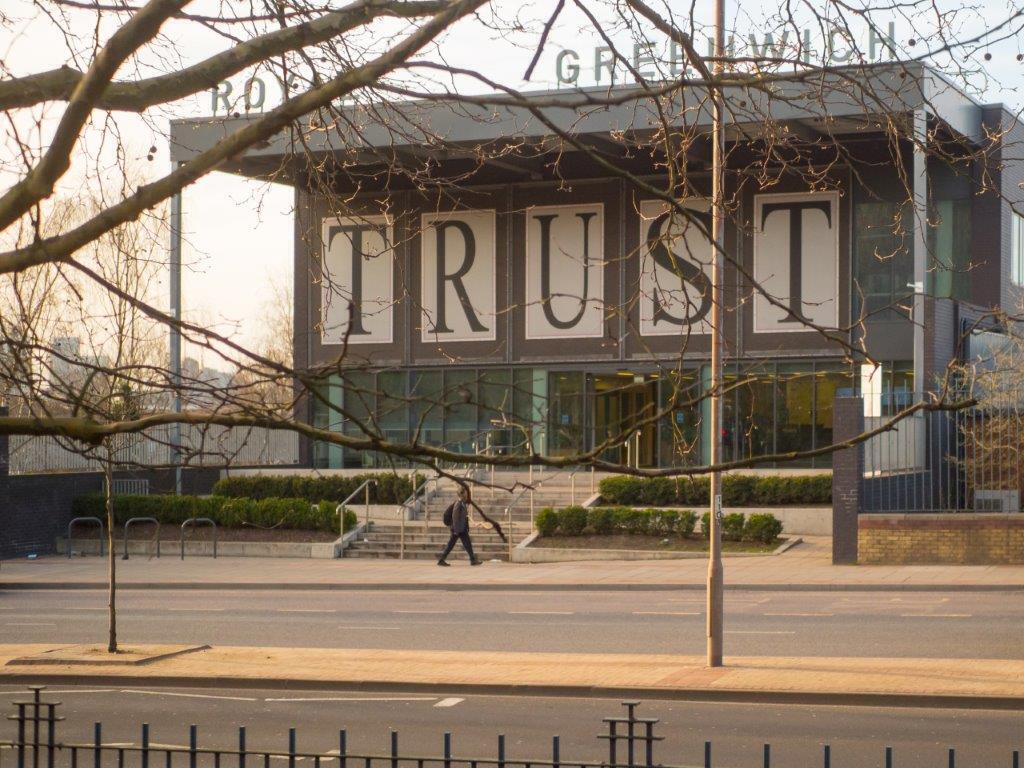
| Address | 765 Woolwich Road, Greenwich, London, SE7 8LJ |
If you obtain a grade 3 or below in mathematics, you will be required to retake this as part of your individual programme of study. You will be given two opportunities to retake your GCSE exams, first in November and, if necessary, again in May/June. • Basic data handling, presenting and interpreting charts and graphs • Problem solving by adapting known methods • Recognising patterns within situations • Reasoning and basic logic • series, functions and graphs • investigate practical problems in statistics and mechanics and write reports
• Ideally, you should have a grade 7 in GCSE maths. • Students who are keen to do A level maths but have a grade 6 will be considered on an individual basis. This is providing that they have a strong GCSE grade profile and have achieved a minimum of grades 7 and 6 in GCSE combined science (or grade 7 and grade 6 in two single science subjects). Considering students on an individual basis, those with a grade 6 in maths may be asked to successfully complete an intensive algebra bridging course. This is to ensure that they have the algebra skills required for the course.
How You Will Be Assessed • Paper 1 – Content from proof, Algebra & functions, Coordinate geometry, sequences & series, Trigonometry, exponentials &logarithms, Differentiation, Integration, Numerical methods and Vectors • Paper 2 – Content from Paper 1 and may contain questions on any topics from the Pure Mathematics content. • Paper 3 – Content from Paper 1 plus content from statistical sampling, data presentation and interpretation, probability,statistical distributions, statistical hypothesis testingvectors, quantities and units in mechanics, kinematics, forces and Newton’slaws, moments.