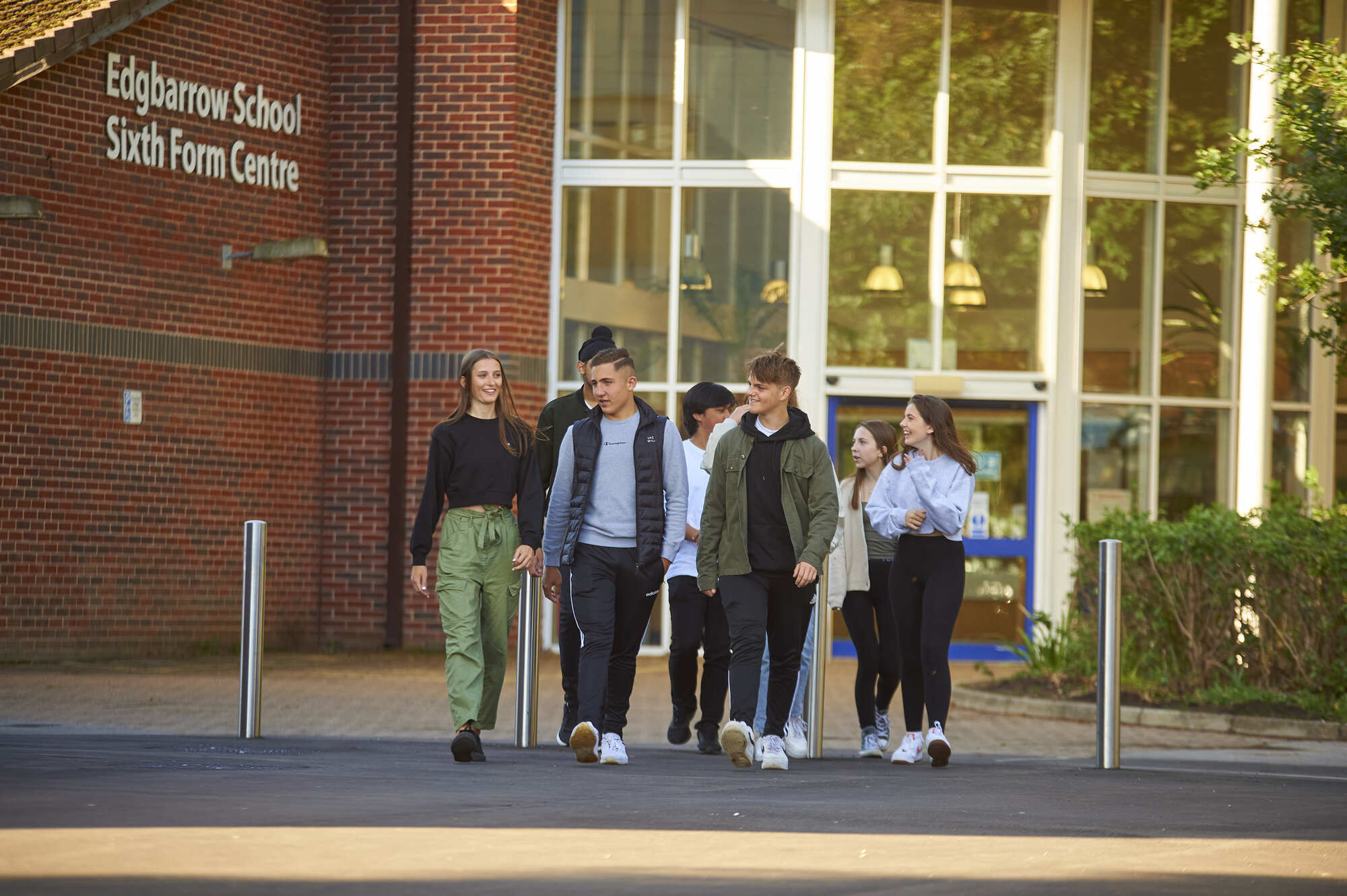
Sociology is the study of people and their role in contemporary culture. It examines how an individual’s experience can be shaped by factors such as wealth, gender and ethnicity. Sociology allows students to see their world in a different way and to challenge taken for granted assumptions about the way we live considering questions like; how does social media shape our identity? And why are subcultures formed?
Grade 4 in GCSE Sociology. Grade 5 in GCSE English Language. You do not need GCSE Sociology to study this course. However, if Sociology has been studied previously you will have achieved at least a grade 4. If a student does not achieve a 5 in English, students must be able to demonstrate a solid GCSE profile (grade 4s/merits) will be considered.
Component one - 30% of qualification: Introducing social processes and the creation of identities; this is explored through the topic of media and the digital globalised society; exploring how the increase in technology and social media shape our thoughts and behaviours. Component two - 35% of qualification: Researching social inequality; inequity in power and wealth is explored through considering differences in class, gender and ethnicity with a specific focus on the sociological methods. Component three - 35% of qualification: The contemporary social world; this explored through two topics, firstly the digital social world and secondly the contemporary education system.
About Education Provider
| Region | South East |
| Local Authority | Bracknell Forest |
| Ofsted Rating | Outstanding |
| Gender Type | Co-Educational |
| Address | Grant Road, Crowthorne, RG45 7HZ |
Sociology is the study of people and their role in contemporary culture. It examines how an individual’s experience can be shaped by factors such as wealth, gender and ethnicity. Sociology allows students to see their world in a different way and to challenge taken for granted assumptions about the way we live considering questions like; how does social media shape our identity? And why are subcultures formed?
Grade 4 in GCSE Sociology. Grade 5 in GCSE English Language. You do not need GCSE Sociology to study this course. However, if Sociology has been studied previously you will have achieved at least a grade 4. If a student does not achieve a 5 in English, students must be able to demonstrate a solid GCSE profile (grade 4s/merits) will be considered.
Component one - 30% of qualification: Introducing social processes and the creation of identities; this is explored through the topic of media and the digital globalised society; exploring how the increase in technology and social media shape our thoughts and behaviours. Component two - 35% of qualification: Researching social inequality; inequity in power and wealth is explored through considering differences in class, gender and ethnicity with a specific focus on the sociological methods. Component three - 35% of qualification: The contemporary social world; this explored through two topics, firstly the digital social world and secondly the contemporary education system.