Why choose Philosophy & Ethics? Advanced Level Philosophy & Ethics (Religious Studies) is of particular interest to students wishing to explore diverse aspects of Philosophical, Ethical and ReligiousStudy. It will appeal to students looking to develop their critical and evaluative skills and to those looking to build upon their experience of Philosophy & Ethics (Religious Studies) at GCSE. In addition to being of considerable value in its own right, the course may complement and balance choices in other subject areas. The Specification offers an academic and thought-provoking approach to the study of Philosophy, Ethics and Religion and is accessible to candidates of any religious persuasion or none. The course encourages students to • develop their interest in, and enthusiasm for, a rigorous study of Philosophy and Ethics and its relation to the wider world • treat the subject as an academic discipline by developing knowledge, understanding and skills appropriate to a detailed specialist study • adopt an enquiring, critical and reflective approach to the subject • reflect on and develop their own values, opinions and attitudes in the light of their learning Candidates will have an opportunity to study a wide range of aspects of this academic discipline including: philosophical, textual, theological, historical, ethical and phenomenological perspectives; thereby making a positive contribution to their understanding of Philosophy and Religion and its impact on life. What topics does the Advanced Level Course Cover? The course is linear in structure, with candidates studying a total of twocomponents at Advanced Level. For both components, candidates will study one of five main world religions: Buddhism, Christianity, Hinduism, Islam, and Judaism 1. Component 1 – Philosophy and Religion and Ethics. This component includes a detailed study and analysis of the following key areas, with reference to one of the religions listed above: Section A: Philosophy of religion • Arguments for the existence of God • Evil and suffering • Religious experience • Religious language • Miracles • Ideas of the Self and life after death Section B: Ethics and religion • Ethical theories • Issues of human life and death • Issues of animal life and death • Introduction to meta ethics • Free will and moral responsibility • Conscience • Utilitarianism - Bentham and Kant 2. Component 2 – Study of religion and dialogues. Within this component, students will undertake an extensive exploration and evaluation of the following, with reference to the same religion as Component 1 Section A: Study of religion –the following topics are covered: • Sources of wisdom and authority • God/gods/ultimate reality • Self, death and the afterlife • Good conduct and key moral principles • Expression of religious identity • Religion, gender and sexuality • Religion and science • Religion and secularisation • Religion and religious pluralism Section B: The dialogue between philosophy of religion and religion. How religion is influenced by, and has an influence on philosophy of religion in relation to the issues studied. Section C: The dialogue between ethical studies and religion. How religion is influenced by, and has an influence on ethical studies in relation to the issues studied. (Further details on these modules can be obtained via the AQA website; www.aqa.org.uk/7062) Assessment For eachcomponent studied, candidates will sit one written exam of 3 hours. Each paper is worth 100 marks and is 50% of the final A-Level mark. In Component 1 – candidates will answer a total of four compulsory two part questions, two from Section A and two from Section B. The first part of each question is worth 10 marks and tests AO1 (see below) and the second part of each question is worth 15 marks (AO2). Questions may span more than one topic area. In Component 2 – candidates will answer two compulsory two part questions from Section A, with marks following the same format as Component 1. In addition, candidates will answer one unstructured synoptic question from a choice of two in both Section B & C. Each question carries 25 marks. Assessments Objectives/Skills Using Assessment Objectives set by Ofqual, the course is designed to test student’s ability to Assessment Objective 1 Demonstrate knowledge and understanding of religion and belief, including • religious, philosophical and/or ethical thought and teaching • the influence of beliefs, teachings and practices on individuals, communities and societies • the cause and significance of similarities and differences in belief, teaching and practice • approaches to the study of religion and belief Assessment Objective 2 Analyse and evaluate aspects of, and approaches to, religion and belief, including their significance, influence and study. The course will also enable students to develop many of the key skills essential for their future careers including; Communication, Information Technology, Working with Others, and Improving Own Learning and Performance. Who is the course suitable for? The course will particularly appeal to students who • have a lively and enquiring mind • want to consider aspects of the human condition, especially the spiritual, philosophical and moral • are interested in current affairs – particularly relating to moral and ethical issues • enjoy studying a subject that is relevant to real life and experience • want to broaden their AS/Advanced Level studies What do students progress to after completing the course? Students with Advanced Level Religious Studies have access to a wide range of career and Higher Education opportunities. Students will use and develop a variety of transferable skills. The course encourages students to develop the critical and evaluative skills which will may enable them to progress to Higher Education to study a wide range of courses, including Philosophy, Religious Studies, Theology, Law, Medicine, Administration, Media, Sociology and the Social Sciences, Arts/Humanities and Classics. Religious Studies complements many other popular A Levels including: Law, History, History of Art, Government and Politics, Sociology and English Literature.
Grade 5 in RE GCSE or a Humanities subject Each course has a general and a subject specific requirement. The general requirement will depend on the programme you are studying. Please see the general requirement for each programme below. Programme 4; Four A Levels: 7 GCSEs Grades at 9-5 including English and Maths (plus subject specific entry criteria) Programme 3; Three A Levels/Vocational courses and EPQ: 5 GCSEs Grades at 9-4 with a minimum of five or more Grade 5s including English and Maths (plus subject specific entry criteria) Programme 2; Three A Levels/Vocational courses: 5 GCSEs Grades at 9-4 including English and Maths (plus subject specific entry criteria) Programme 1; Three A Levels/Vocational courses and Maths GCSE (retake): 5 GCSEs Grades at 9-4 including a Grade 5 in English and a Grade 3 in Maths (plus subject specific entry criteria)
About Education Provider
| Region | London |
| Local Authority | Ealing |
| Ofsted Rating | Outstanding |
| Gender Type | Co-Educational |
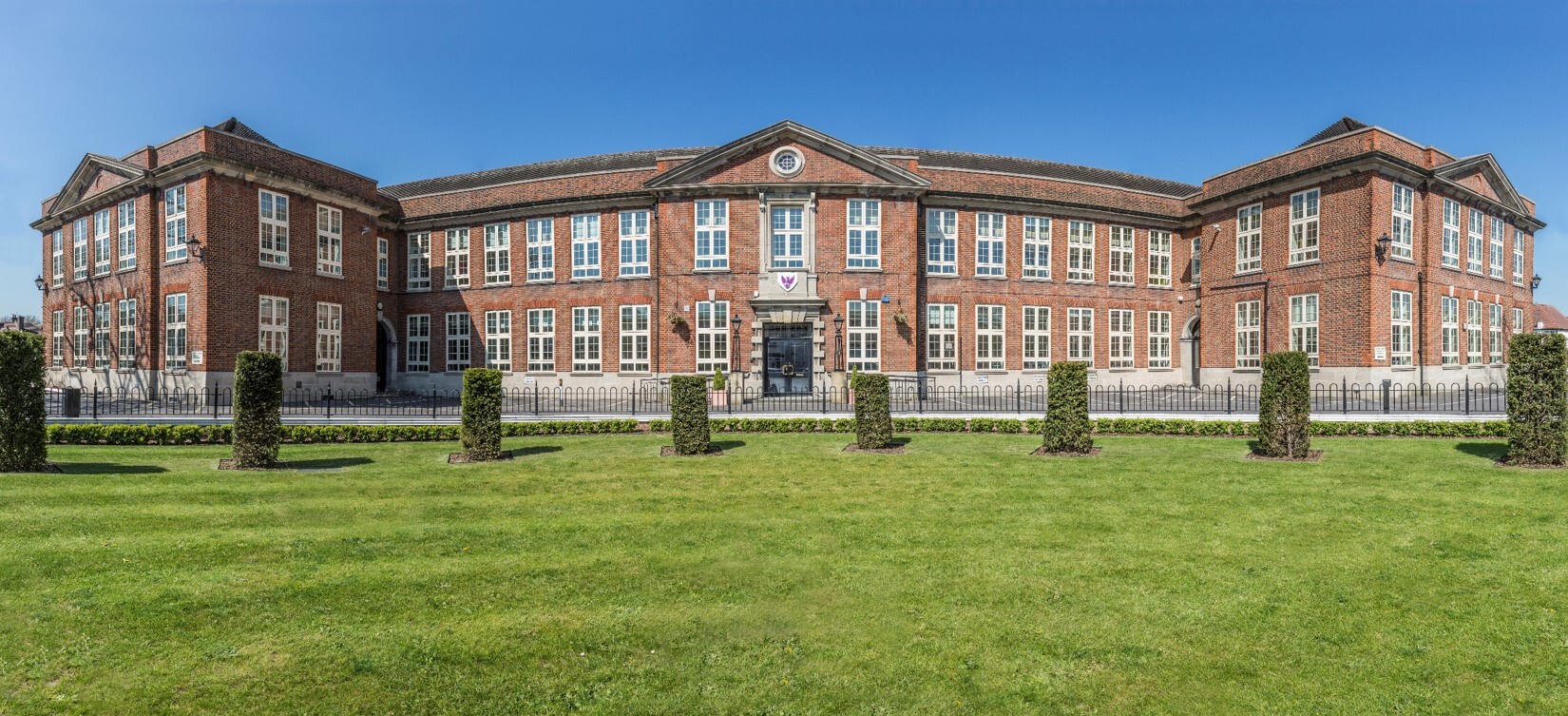
| Address | Drayton Bridge Road, Hanwell, London, W7 1EU |
Why choose Philosophy & Ethics? Advanced Level Philosophy & Ethics (Religious Studies) is of particular interest to students wishing to explore diverse aspects of Philosophical, Ethical and ReligiousStudy. It will appeal to students looking to develop their critical and evaluative skills and to those looking to build upon their experience of Philosophy & Ethics (Religious Studies) at GCSE. In addition to being of considerable value in its own right, the course may complement and balance choices in other subject areas. The Specification offers an academic and thought-provoking approach to the study of Philosophy, Ethics and Religion and is accessible to candidates of any religious persuasion or none. The course encourages students to • develop their interest in, and enthusiasm for, a rigorous study of Philosophy and Ethics and its relation to the wider world • treat the subject as an academic discipline by developing knowledge, understanding and skills appropriate to a detailed specialist study • adopt an enquiring, critical and reflective approach to the subject • reflect on and develop their own values, opinions and attitudes in the light of their learning Candidates will have an opportunity to study a wide range of aspects of this academic discipline including: philosophical, textual, theological, historical, ethical and phenomenological perspectives; thereby making a positive contribution to their understanding of Philosophy and Religion and its impact on life. What topics does the Advanced Level Course Cover? The course is linear in structure, with candidates studying a total of twocomponents at Advanced Level. For both components, candidates will study one of five main world religions: Buddhism, Christianity, Hinduism, Islam, and Judaism 1. Component 1 – Philosophy and Religion and Ethics. This component includes a detailed study and analysis of the following key areas, with reference to one of the religions listed above: Section A: Philosophy of religion • Arguments for the existence of God • Evil and suffering • Religious experience • Religious language • Miracles • Ideas of the Self and life after death Section B: Ethics and religion • Ethical theories • Issues of human life and death • Issues of animal life and death • Introduction to meta ethics • Free will and moral responsibility • Conscience • Utilitarianism - Bentham and Kant 2. Component 2 – Study of religion and dialogues. Within this component, students will undertake an extensive exploration and evaluation of the following, with reference to the same religion as Component 1 Section A: Study of religion –the following topics are covered: • Sources of wisdom and authority • God/gods/ultimate reality • Self, death and the afterlife • Good conduct and key moral principles • Expression of religious identity • Religion, gender and sexuality • Religion and science • Religion and secularisation • Religion and religious pluralism Section B: The dialogue between philosophy of religion and religion. How religion is influenced by, and has an influence on philosophy of religion in relation to the issues studied. Section C: The dialogue between ethical studies and religion. How religion is influenced by, and has an influence on ethical studies in relation to the issues studied. (Further details on these modules can be obtained via the AQA website; www.aqa.org.uk/7062) Assessment For eachcomponent studied, candidates will sit one written exam of 3 hours. Each paper is worth 100 marks and is 50% of the final A-Level mark. In Component 1 – candidates will answer a total of four compulsory two part questions, two from Section A and two from Section B. The first part of each question is worth 10 marks and tests AO1 (see below) and the second part of each question is worth 15 marks (AO2). Questions may span more than one topic area. In Component 2 – candidates will answer two compulsory two part questions from Section A, with marks following the same format as Component 1. In addition, candidates will answer one unstructured synoptic question from a choice of two in both Section B & C. Each question carries 25 marks. Assessments Objectives/Skills Using Assessment Objectives set by Ofqual, the course is designed to test student’s ability to Assessment Objective 1 Demonstrate knowledge and understanding of religion and belief, including • religious, philosophical and/or ethical thought and teaching • the influence of beliefs, teachings and practices on individuals, communities and societies • the cause and significance of similarities and differences in belief, teaching and practice • approaches to the study of religion and belief Assessment Objective 2 Analyse and evaluate aspects of, and approaches to, religion and belief, including their significance, influence and study. The course will also enable students to develop many of the key skills essential for their future careers including; Communication, Information Technology, Working with Others, and Improving Own Learning and Performance. Who is the course suitable for? The course will particularly appeal to students who • have a lively and enquiring mind • want to consider aspects of the human condition, especially the spiritual, philosophical and moral • are interested in current affairs – particularly relating to moral and ethical issues • enjoy studying a subject that is relevant to real life and experience • want to broaden their AS/Advanced Level studies What do students progress to after completing the course? Students with Advanced Level Religious Studies have access to a wide range of career and Higher Education opportunities. Students will use and develop a variety of transferable skills. The course encourages students to develop the critical and evaluative skills which will may enable them to progress to Higher Education to study a wide range of courses, including Philosophy, Religious Studies, Theology, Law, Medicine, Administration, Media, Sociology and the Social Sciences, Arts/Humanities and Classics. Religious Studies complements many other popular A Levels including: Law, History, History of Art, Government and Politics, Sociology and English Literature.
Grade 5 in RE GCSE or a Humanities subject Each course has a general and a subject specific requirement. The general requirement will depend on the programme you are studying. Please see the general requirement for each programme below. Programme 4; Four A Levels: 7 GCSEs Grades at 9-5 including English and Maths (plus subject specific entry criteria) Programme 3; Three A Levels/Vocational courses and EPQ: 5 GCSEs Grades at 9-4 with a minimum of five or more Grade 5s including English and Maths (plus subject specific entry criteria) Programme 2; Three A Levels/Vocational courses: 5 GCSEs Grades at 9-4 including English and Maths (plus subject specific entry criteria) Programme 1; Three A Levels/Vocational courses and Maths GCSE (retake): 5 GCSEs Grades at 9-4 including a Grade 5 in English and a Grade 3 in Maths (plus subject specific entry criteria)