What will I learn on this course? Further Maths will introduce you to fascinating mathematical concepts. It will broaden and deepen the maths covered in A Level Maths developing your problem solving skills, which will help to boost your performance in A Level Maths. If you plan to apply for any degree that is rich in maths, a qualification in Further Maths will give your application an edge. You will study more maths that’s relevant to your university course, which will stand you in good stead for first year degree level Mathematics. Some prestigious university degree courses now require a Further Maths qualification. Mathematics at ALevel is divided into: Core Pure Mathematics Pure Mathematics develops your mathematical ability and introduces you to new topics, such as matrices and complex numbers, which are vital for maths-rich degrees in areas such as sciences, engineering, statistics and computing, as well as mathematics itself. Mechanics When you study mechanics you will learn how to describe mathematically the motion of objects and how they respond to forces acting upon them, from cars in the street to satellites revolving around a planet. You will learn the technique of mathematical modelling; that is, of turning a complicated physical problem into a simpler one that can be analysed and solved using mathematical methods. Statistics When you study statistics you will learn how to analyse and summarise numerical data in order to arrive at conclusions about it. You will extend the range of probability problems that you started for GCSE by using the new mathematical techniques studied on the core mathematics course. If you study three units of statistics you will apply some of the statistical ideas of the course by doing some assessed practical work. Decision Mathematics Students following the Decision course will learn how to use algorithms that have been developed for solving real-life problems. You will be analysing techniques to solve problems in time-keeping, organisation and maximising profits while minimising costs for businesses. As you progress you will also learn for example, some of the mathematical concepts required in winning a typical board or card game. How can I develop my full range of skills by doing this course? As well as covering an advanced level study of Mathematics, this course could enable you to develop some key skills which will be essential to you whatever you go on to do afterwards. The key skills that you develop on this course will depend on the units that you cover. Your teacher will be able to give you further advice as you study for this course. What could I go on to do at the end of my course? Advanced Level Mathematics is a much sought after qualification for entry to a wide variety of full-time courses in Higher Education. There are also many areas of employment that see a Mathematics Advanced Level as an important qualification and it is often a requirement for the vocational qualifications related to these areas. Higher Education courses or careers that either require Advanced Level Further Mathematics or are strongly related include • Engineering • Computing • Sciences If you wanted to continue your study of Further Mathematics after Advanced Level you could follow a course in Mathematics at degree level or even continue further as a postgraduate and get involved in mathematical research.
Grade 8 in Mathematics GCSE and taking Mathematics A Level Each course has a general and a subject specific requirement. The general requirement will depend on the programme you are studying. Please see the general requirement for each programme below. Programme 4; Four A Levels: 7 GCSEs Grades at 9-5 including English and Maths (plus subject specific entry criteria) Programme 3; Three A Levels/Vocational courses and EPQ: 5 GCSEs Grades at 9-4 with a minimum of five or more Grade 5s including English and Maths (plus subject specific entry criteria) Programme 2; Three A Levels/Vocational courses: 5 GCSEs Grades at 9-4 including English and Maths (plus subject specific entry criteria) Programme 1; Three A Levels/Vocational courses and Maths GCSE (retake): 5 GCSEs Grades at 9-4 including a Grade 5 in English and a Grade 3 in Maths (plus subject specific entry criteria)
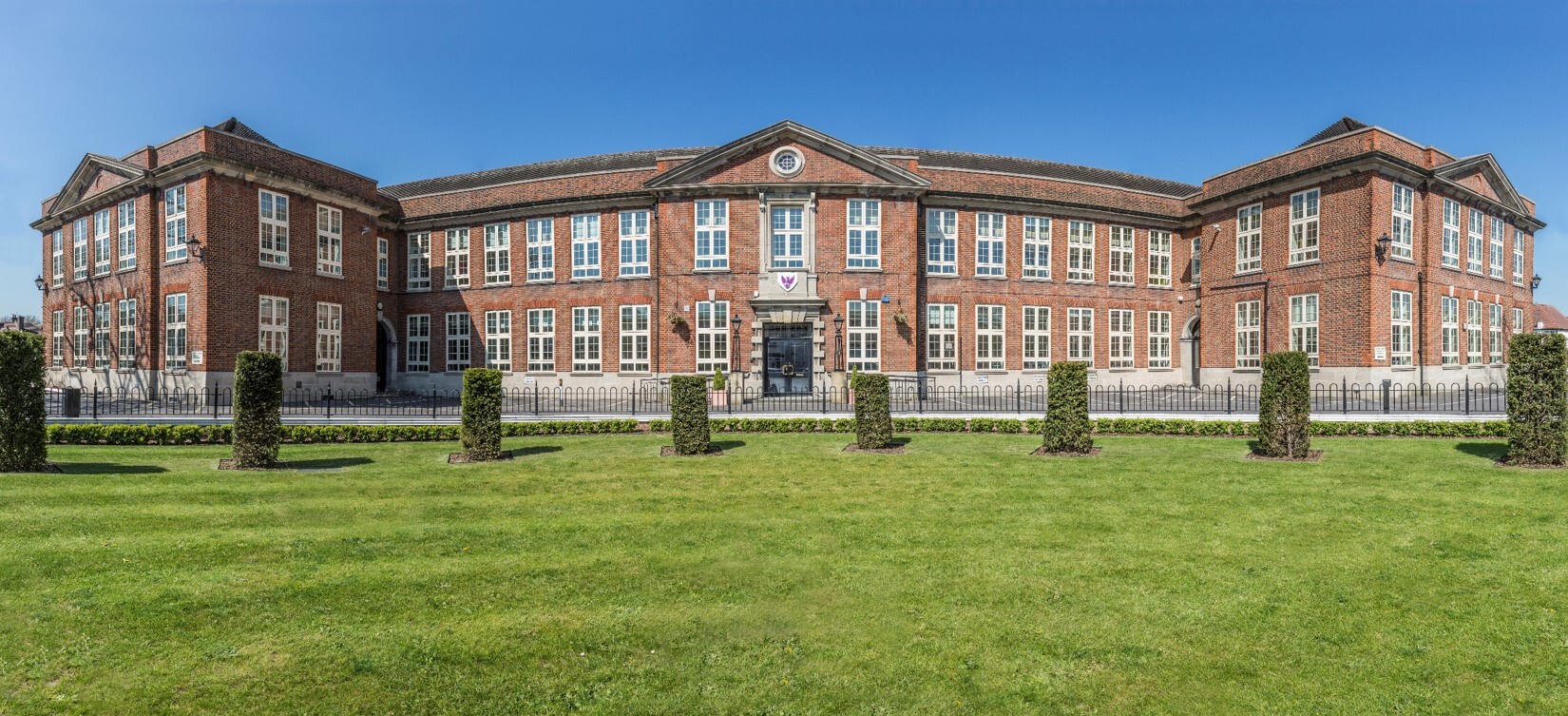
About Education Provider
| Region | London |
| Local Authority | Ealing |
| Ofsted Rating | Outstanding |
| Gender Type | Co-Educational |
| Address | Drayton Bridge Road, Hanwell, London, W7 1EU |
What will I learn on this course? Further Maths will introduce you to fascinating mathematical concepts. It will broaden and deepen the maths covered in A Level Maths developing your problem solving skills, which will help to boost your performance in A Level Maths. If you plan to apply for any degree that is rich in maths, a qualification in Further Maths will give your application an edge. You will study more maths that’s relevant to your university course, which will stand you in good stead for first year degree level Mathematics. Some prestigious university degree courses now require a Further Maths qualification. Mathematics at ALevel is divided into: Core Pure Mathematics Pure Mathematics develops your mathematical ability and introduces you to new topics, such as matrices and complex numbers, which are vital for maths-rich degrees in areas such as sciences, engineering, statistics and computing, as well as mathematics itself. Mechanics When you study mechanics you will learn how to describe mathematically the motion of objects and how they respond to forces acting upon them, from cars in the street to satellites revolving around a planet. You will learn the technique of mathematical modelling; that is, of turning a complicated physical problem into a simpler one that can be analysed and solved using mathematical methods. Statistics When you study statistics you will learn how to analyse and summarise numerical data in order to arrive at conclusions about it. You will extend the range of probability problems that you started for GCSE by using the new mathematical techniques studied on the core mathematics course. If you study three units of statistics you will apply some of the statistical ideas of the course by doing some assessed practical work. Decision Mathematics Students following the Decision course will learn how to use algorithms that have been developed for solving real-life problems. You will be analysing techniques to solve problems in time-keeping, organisation and maximising profits while minimising costs for businesses. As you progress you will also learn for example, some of the mathematical concepts required in winning a typical board or card game. How can I develop my full range of skills by doing this course? As well as covering an advanced level study of Mathematics, this course could enable you to develop some key skills which will be essential to you whatever you go on to do afterwards. The key skills that you develop on this course will depend on the units that you cover. Your teacher will be able to give you further advice as you study for this course. What could I go on to do at the end of my course? Advanced Level Mathematics is a much sought after qualification for entry to a wide variety of full-time courses in Higher Education. There are also many areas of employment that see a Mathematics Advanced Level as an important qualification and it is often a requirement for the vocational qualifications related to these areas. Higher Education courses or careers that either require Advanced Level Further Mathematics or are strongly related include • Engineering • Computing • Sciences If you wanted to continue your study of Further Mathematics after Advanced Level you could follow a course in Mathematics at degree level or even continue further as a postgraduate and get involved in mathematical research.
Grade 8 in Mathematics GCSE and taking Mathematics A Level Each course has a general and a subject specific requirement. The general requirement will depend on the programme you are studying. Please see the general requirement for each programme below. Programme 4; Four A Levels: 7 GCSEs Grades at 9-5 including English and Maths (plus subject specific entry criteria) Programme 3; Three A Levels/Vocational courses and EPQ: 5 GCSEs Grades at 9-4 with a minimum of five or more Grade 5s including English and Maths (plus subject specific entry criteria) Programme 2; Three A Levels/Vocational courses: 5 GCSEs Grades at 9-4 including English and Maths (plus subject specific entry criteria) Programme 1; Three A Levels/Vocational courses and Maths GCSE (retake): 5 GCSEs Grades at 9-4 including a Grade 5 in English and a Grade 3 in Maths (plus subject specific entry criteria)