
General Comment Physics is all around us. It is in the electric light you turn on in the morning: the car you hope to drive to work; your wristwatch, mobile phone and your games console. It makes the stars shine every night and the Sun shine every day, and it makes a rugby ball soar between two posts for that essential last minute drop kick. In studying Physics you will use theories, models and ideas to develop and modify scientific explanations, consider applications and implications of science and appreciate their associated benefits and risks. An AS in Physics is considered desirable by both employers and universities alike as it is a complex and demanding subject which embeds many of the skills and qualities essential in today’s world. Subject Content: 1. Measurements and their errors 2. Particles and radiation 3. Waves 4. Mechanics and materials 5. Electricity 6. Further mechanics and thermal physics 7. Fields and their consequences 8. Nuclear physics 9. Astrophysics
You should have achieved a minimum of 5 GCSE grades at 9-4 with a grade 7 in Maths. You require a grade 7 in GCSE Physics or if studying Combined Science you must have at least achieved 7/6. If you wish to study Physics with Biology or Chemistry you will need at least Grade 7/7 in the 2 Science subjects you wish to study. If you have completed Combined Science you require at least 7/7.
Paper 1 Sections 1-5 and 6.1 (periodic motion) Written exam 2 hours 85 marks 34% of A level 60 marks of short and long answer questions and 25 multiple choice Paper 2 Sections 6.2 7 and 8 Written exam 2 hours 85 marks 34% of A level 60 marks of short and long answer questions and 25 multiple choice Paper 3 Part A Compulsory: Practical skills and data analysis Part B: section 9 Written exam 2 hours 80 marks 32%of A level
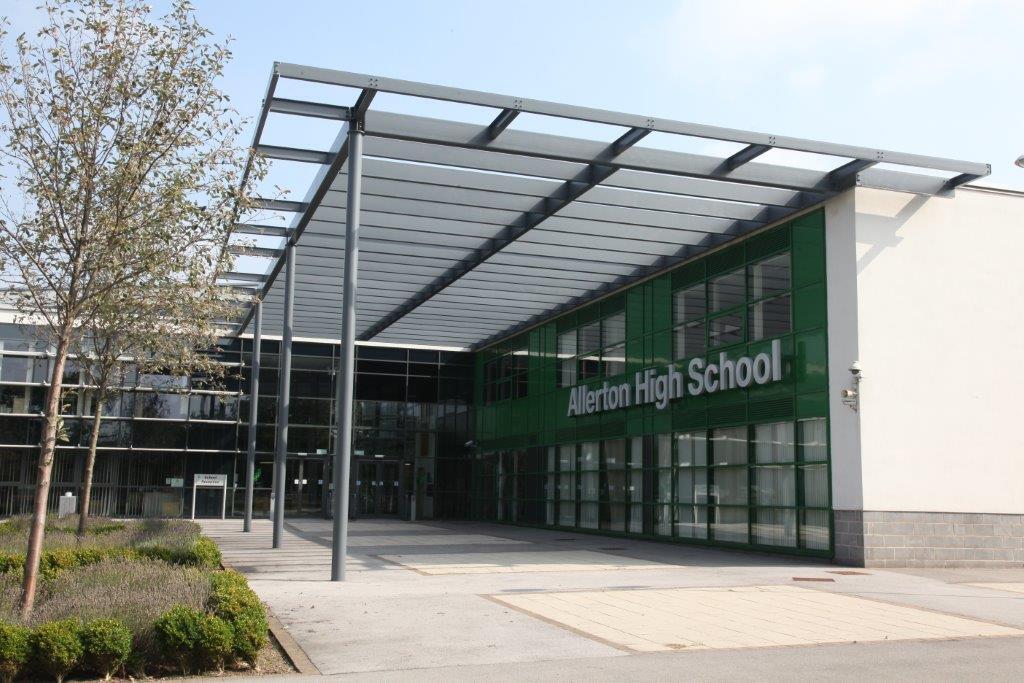
About Education Provider
| Region | Yorkshire and the Humber |
| Local Authority | Leeds |
| Ofsted Rating | Outstanding |
| Gender Type | Co-Educational |
| Address | King Lane, Leeds, LS17 7AG |
General Comment Physics is all around us. It is in the electric light you turn on in the morning: the car you hope to drive to work; your wristwatch, mobile phone and your games console. It makes the stars shine every night and the Sun shine every day, and it makes a rugby ball soar between two posts for that essential last minute drop kick. In studying Physics you will use theories, models and ideas to develop and modify scientific explanations, consider applications and implications of science and appreciate their associated benefits and risks. An AS in Physics is considered desirable by both employers and universities alike as it is a complex and demanding subject which embeds many of the skills and qualities essential in today’s world. Subject Content: 1. Measurements and their errors 2. Particles and radiation 3. Waves 4. Mechanics and materials 5. Electricity 6. Further mechanics and thermal physics 7. Fields and their consequences 8. Nuclear physics 9. Astrophysics
You should have achieved a minimum of 5 GCSE grades at 9-4 with a grade 7 in Maths. You require a grade 7 in GCSE Physics or if studying Combined Science you must have at least achieved 7/6. If you wish to study Physics with Biology or Chemistry you will need at least Grade 7/7 in the 2 Science subjects you wish to study. If you have completed Combined Science you require at least 7/7.
Paper 1 Sections 1-5 and 6.1 (periodic motion) Written exam 2 hours 85 marks 34% of A level 60 marks of short and long answer questions and 25 multiple choice Paper 2 Sections 6.2 7 and 8 Written exam 2 hours 85 marks 34% of A level 60 marks of short and long answer questions and 25 multiple choice Paper 3 Part A Compulsory: Practical skills and data analysis Part B: section 9 Written exam 2 hours 80 marks 32%of A level